Salt Lake City's Best Bat Removal
We've been voted Salt Lake City's best bat removal company the past two years!
Get in touch
Bat Experts
Rapid Response
Trained & Educated
Licensed & Certified
About Salt Lake City Bat Removal
Welcome to saltlakecitybat.com. We are the only qualified bat removal company in Salt Lake City, Utah. While you might be able to persuade a lone bat from moving out of your home with a bat box and mating calls, if a lot of bats have moved in, you should call bat removal experts to handle the job. As bat removal experts, we are trained, experienced, and equipped in bat removal, no matter how many bats you need to have taken out of your home. We can not only handle your bat removal needs, we do it safely and humanely so that not a single bat gets hurt. Bats are important to the ecosystem, and because of that they're federally protected. So we take great care when removing bats so that they can continue to do the important work of eating insects, pollinating flowers, and other bat stuff that they do in their lives. Besides, we really like bats, and we want them to be safe. We want homeowners to be safe, too, so we handle bat removal so you don't try and do something that could get you or the bats hurt. It doesn't matter how many bats or how few there are that need to be removed. We have the tools and training to handle your bat removal needs and make sure you, us, and the bats are safe during the entire process. That means happy bats and happy homeowners, which is why we do this work in the first place. We want everyone to be happy, including the bats, and they would be happier outside of your home, and you'd be happier with them outside as well. We operate 24-7-365, so don't hesitate to call us at 385-240-5612 to discuss your bat problem and schedule a fast appointment.
Residential
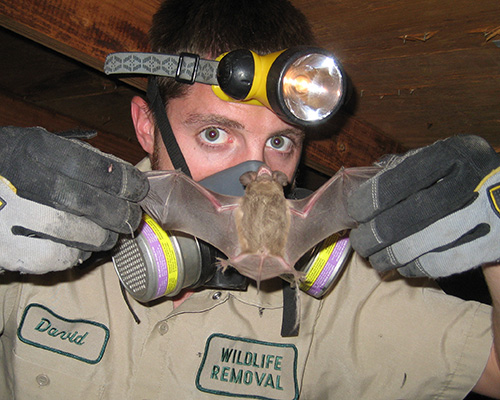
We are experts at removing bats from residential properties. Whether you have a single bat trapped in your house, a colony roosting in your attic, and/or various other problems, there is no need to worry! During our removal process, we make sure to inspect your entire home carefully, tracking down all the entrypoints bats are using to invade your place. Next, we perform a process called live exclusion (where no bats are harmed and all exit your property), then seal all entry holes completely shut. We also take care of the cleanup process after, so your home is safe and clean!
Learn MoreCommercial
Besides residential areas, we also have a wealth of experience removing bats from commercial properties! We begin by investigating the area for possible bat entrances, covering holes even as small as 1/4 of an inch. Through our live exclusion process, bats leave the building through one-way exits, and we seal up every hole afterward. Once the bats have been removed, we perform a cleanup process. This includes dealing with guano, replacing damaged insulation, and decontaminating the place.
Learn More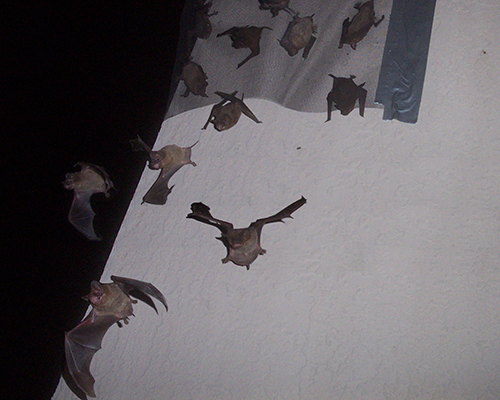
Contact us for bat removal today!
What Our Customers Say
I had a bat flying around in my house at 9pm, and CITY bat removal came right out and caught it in a net.
Sarah Lakewood
I had an annoying colony of bats stuck in my attic for a while before I finally decided to call for help. They were able to quickly and thoroughly solve the problem!
Brandon Chung
They did a great job clearing my attic of bats and didn't hurt any of the creatures.
Charlotte Demers
The technicians at CITY Bat Removal are skilled, professional, and know exactly what they're doing. Would highly recommend.
Mark O'Connor
My house stank of bats and their guano inside my wall. CITY Bat Removal not only removed the bats, they also got rid of the smell!
Alexis Ramirez
.jpg)
What is the summer maternity season?
A bat's mating habits are actually quite a fascinating matter, one that can help us better understand these tiny winged creatures. Quite often, bats will find their way into our human homes, and sometimes, they do this during the summer maternity season. In order to understand why this happens and what we can do about it, we first need to understand what the summer maternity season is all about.
So let's talk a bit about the mating habits of bats, and how they might impact our homes.
When do bats reproduce?
Interestingly enough, female bats have the ability to actually store semen in their reproductive tract and make themselves pregnant later. They do this out of a very simple consideration - during the warm months of summer, food (primarily insects, for most bats) is more readily available. This means that their pups can develop more easily and healthily, and pregnancy is made that much easier for the females.
Of course, the term "summer maternity season" shouldn't be taken literally. Depending on the specific part of the country you live in, the summer maternity season can start as early as April, and end in late August, or even early September. This depends quite heavily on the climate in that specific area. Of course, in more tropical climates, where the weather is good all year round, females may choose to reproduce more often, since food isn't such a problem. But for the purpose of this article, we'll focus on the summer maternity season in the United States, averaging a good few months between April/May to late August.
Summer Maternity Season
After the reproductive stage is over, pregnant females will band together in special maternity colonies, that will allow them to birth and nurture their young to independence. During this time, maternity colonies are protected by law in the United States, which may often cause a problem for homeowners.
You see, bats are considered a beneficial creature for the environment because a large chunk of their diet consists of undesirable insects. They help keep the population of said insects in check, and so it's necessary for bats to be able to reproduce safely. This means that if you, as a homeowner, discover a maternity colony on your property, you have no choice but to let it be. If disturbed, bat females (who are very sensitive during this time) will abandon their young, usually causing them to die.
So even if you've got 40 female bats roosting in your attic during the summer maternity season, you are not allowed to do anything to disband or shoo them away. Rather, you need to give it time and wait for the colony to relocate on its own.
It's not just a legal thing.
First of all, consider the horror that a female bat must feel being separated from its pup. Most bat exclusion methods will only affect the mothers since they are the only ones strong enough in a maternity colony to leave and hunt. By excluding the mother bat, it will become desperate and attempt to get back to her pup by any means necessary. Think about it for a second. This could easily do more harm than good, and wreak havoc inside your home.
Second of all, exclusion of the adults would have dire consequences for the pups, leaving them to starve and die, rotting away inside your home. This will cause quite a stench and may even attract other predators, in search of prey. Not to mention that it can easily get you in trouble with the law.
So if you're hosting a bat colony complete with babies, your best bet is to just wait for them to relocate on their own.